
The founder and artistic director of Enjoy Jazz has chosen “Beauty” as the theme for his “Festival for Jazz and More” for the fourth consecutive year. We spoke with him about how this concept—which at first glance might seem almost naive—aligns with the reputation of Enjoy Jazz as a festival that has always fostered discourse, meaning it not only reflects broader social trends but also critically examines them.
Mr. Kern, is “ Enjoy Jazz ” now fading into obscurity?
(Laughs.) I’d be happy to. Seriously, though: the question is, what kind of beauty? Let me put it in a slightly absurd way: beauty isn’t necessarily beautiful. What I mean by that is: if
we reduce the concept of beauty to what is beautiful in the sense of a naive perception or a sentiment that appeals to the majority, we obscure our view of what’s essential. Incidentally, that’s one of the reasons why I’ve always chosen the English word for our festival motto. Because I hope that way I can counteract clichéd reactions. But I gather from your question that it hasn’t really worked for you.
I'm trying my best. Could you briefly outline the concept of beauty that underlies the festival's theme?
Of course. But let me start by saying that for nearly a quarter of a century, I’ve struggled to come up with a theme for the festival—and that’s why I never did.
Why is that?
Because I’ve seen that a theme could be misunderstood as a template into which the entire program must now be forced. But for a festival as diverse as Enjoy Jazz , a theme can only ever serve as a magnifying glass through which I can focus on a strand of the whole that’s particularly important to me and make it more visible. When done well, connections emerge on their own. John Coltrane once said, “Sometimes I’d think I was making music through the wrong end of a magnifying glass.” Through this supposedly incorrect use of the magnifying glass, the very opposite of its intended purpose emerges in the process of focusing: an opening up and broadening of one’s perspective.
A beautiful image, and not just during the Coltrane Year. But back to your concept of beauty …
Beauty, as we understand it, is an inclusive concept. It is perhaps the only revolution that is constantly present. The Fondazione Dries Van Noten is presenting an exhibition in Venice titled “The Only True Protest Is Beauty” through early October. The announcement states: “Beauty is not a rigid ideal, but a questioning presence.”
I wholeheartedly agree with that.
For beauty encompasses, shapes, or influences every facet of our lives: social, moral, political, economic, ecological, and, of course, aesthetic. If we are to believe Schiller—and who am I to contradict him?—beauty is the key to truth and goodness. I also like the assessment by the writer Henri Stendhal that beauty is merely “a promise of happiness”
. A promise at the heart of which we are all, knowingly or unknowingly, constantly working. The essence of beauty would therefore be change or transformation. Which, in turn, is an important
part of my motivation as a festival organizer. The opening lines of Rilke’s First Duino Elegy read: “For beauty is nothing / but the beginning of the terrible, which we can still just bear / and we admire it so because it calmly refuses / to destroy us.” Heiner Müller articulates the potential of art in his 1950s poem “Bilder” and, in stark
contrast, in the text “Schall Coriolan” as follows: “For beauty signifies the possible end of horrors.” For me, this sentence is pure beauty, and I believe in it. It has been interpreted as a reversal of the resigned withdrawal from the world characteristic of bourgeois modernism.
So does that mean “Beauty” is the most personal of your mottos so far?
Maybe, yes. Lately, I've often found myself thinking about the great jazz avant-gardist Peter Brötzmann.
In a conversation after the soundcheck, he once said that beauty was indeed very important to him, but that it was defined differently—as its polar opposite. Because—and I’ve always shared this view—“What is sold to us as beauty could no longer be valid after a war like that, that is, after World War II. We had to start from scratch.”
There are always certain experiences and events beyond which one simply cannot go back.
That leaves us with the inevitable question: Looking at your schedule, what are you most looking forward to?
I was looking forward to hearing what others thought about it: the invited artists, journalists, and, of course, the audience. But knowing you as I do, you wanted me to give you specific
event recommendations.
They saw right through me.
Well, let me tell you something: Throughout the history of Enjoy Jazz , there have been concerts where, while putting together the program, I thought, “This is going to be my highlight of the festival.” And even though
almost every one of these concerts has actually exceeded my expectations, not once in 27 years have I ended up feeling that it was the most exciting one of the year. Which leaves only two possible conclusions. First: Surprises are apparently an important part of this festival. And second: The surest way to make sure you don’t miss what’s best for you
is to attend as many events as possible.
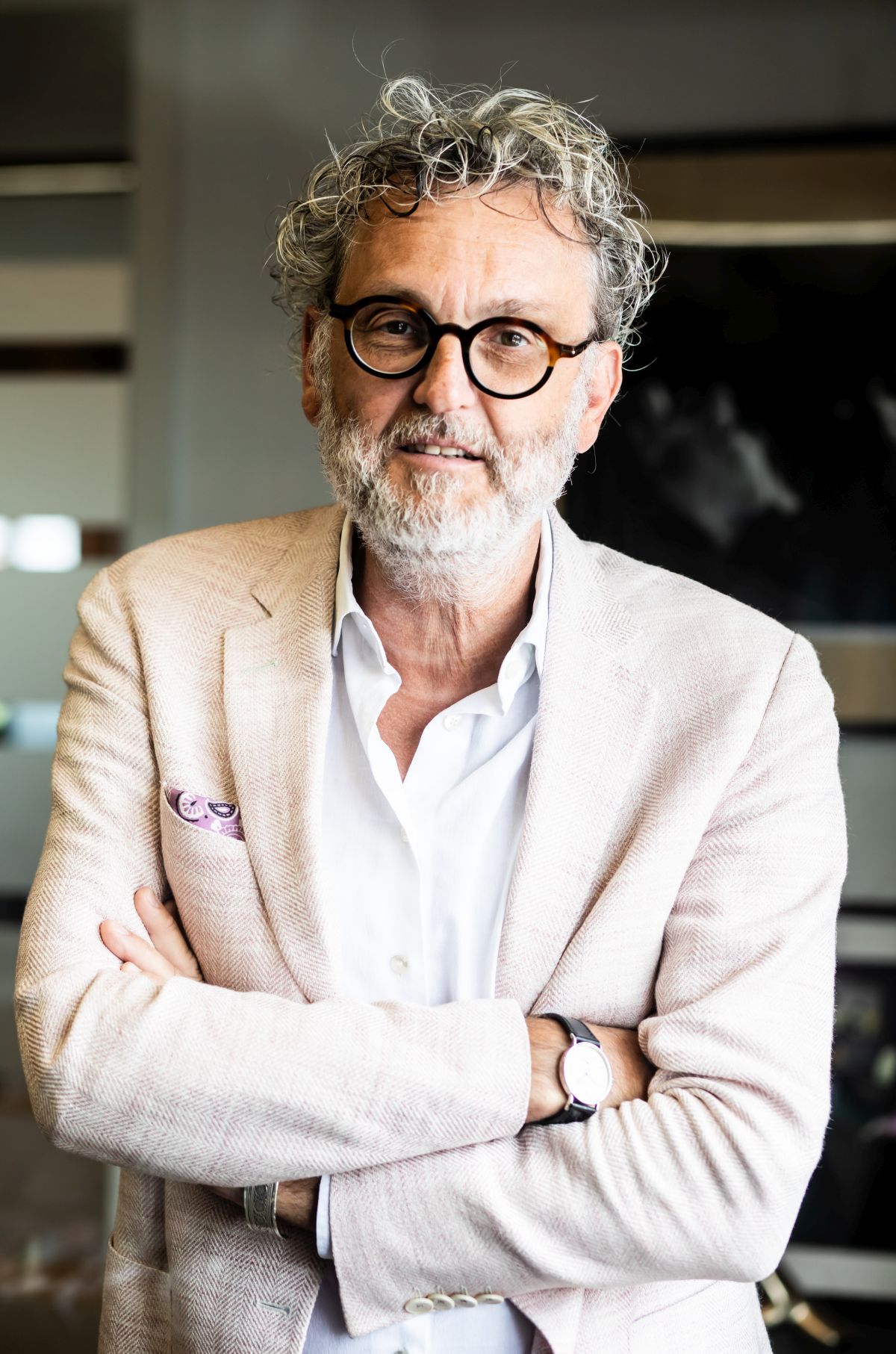
Rainer Kern, Artistic Director of Enjoy jazz
Date: august 18 , 2026
Latest posts
More articles in the category: interview
New Spiritual Jazz
When the Past Becomes the Future: The spiritual power of jazz has always been a social one as well. Today’s jazz draws not only new energy from the growing creative focus on this phenomenon, but also a contemporary relevance. ...
I hear something you can't see
Enjoy Jazz Featuring World-Class Female Singers In 2017, Michael W. Kraus, a professor of psychology at Yale University, made an interesting observation: when we listen exclusively to the person we’re talking to—that is, without seeing or touching them—we can ...
100 Years After Coltrane – Born to Last
John Coltrane is among those who paved the way for spiritual jazz as both a musical practice and a spiritual attitude. However, the spiritual power of jazz sometimes also lies in its ability to go far beyond ...